Strength training for runners: 6 essential exercises
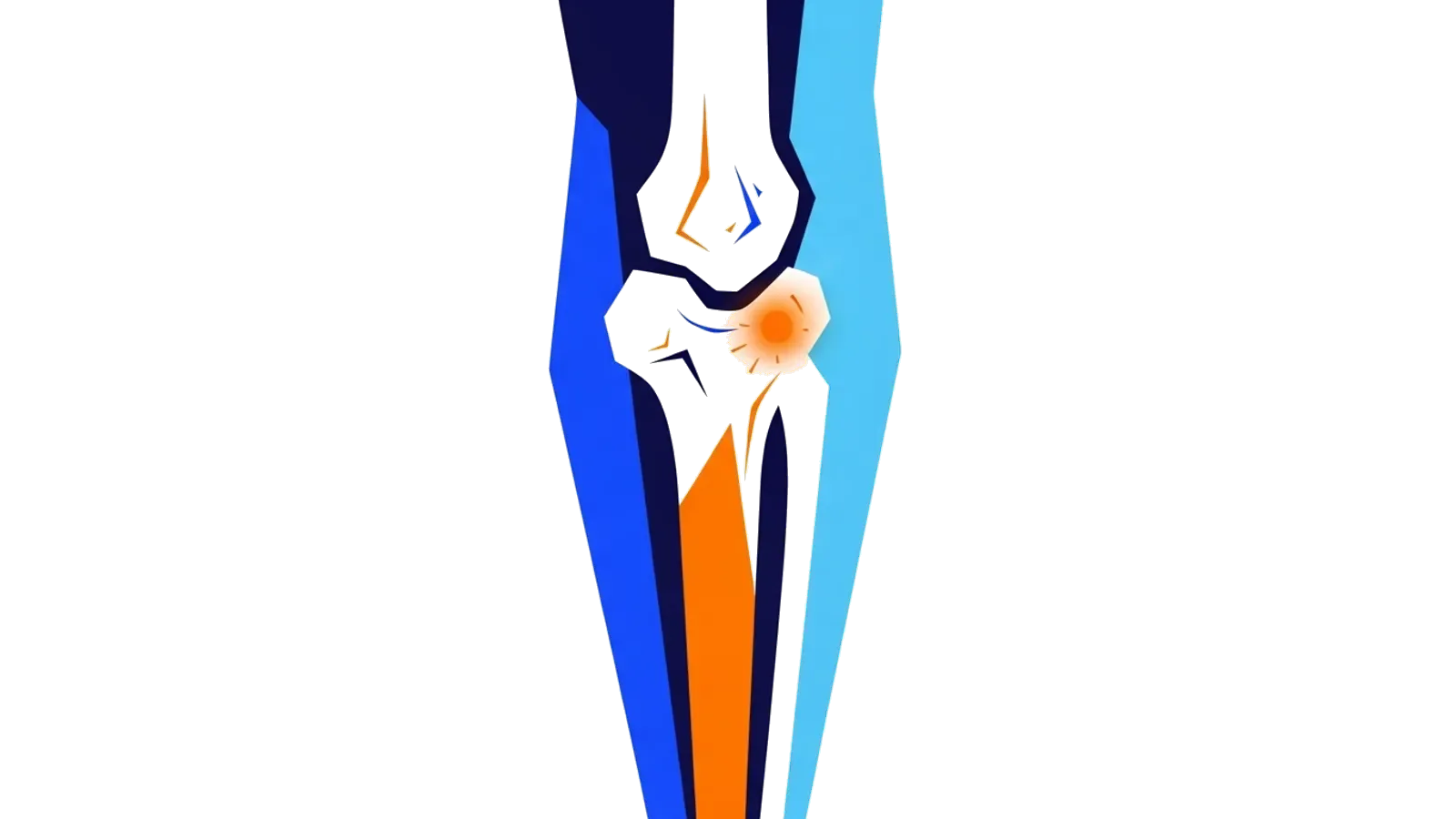
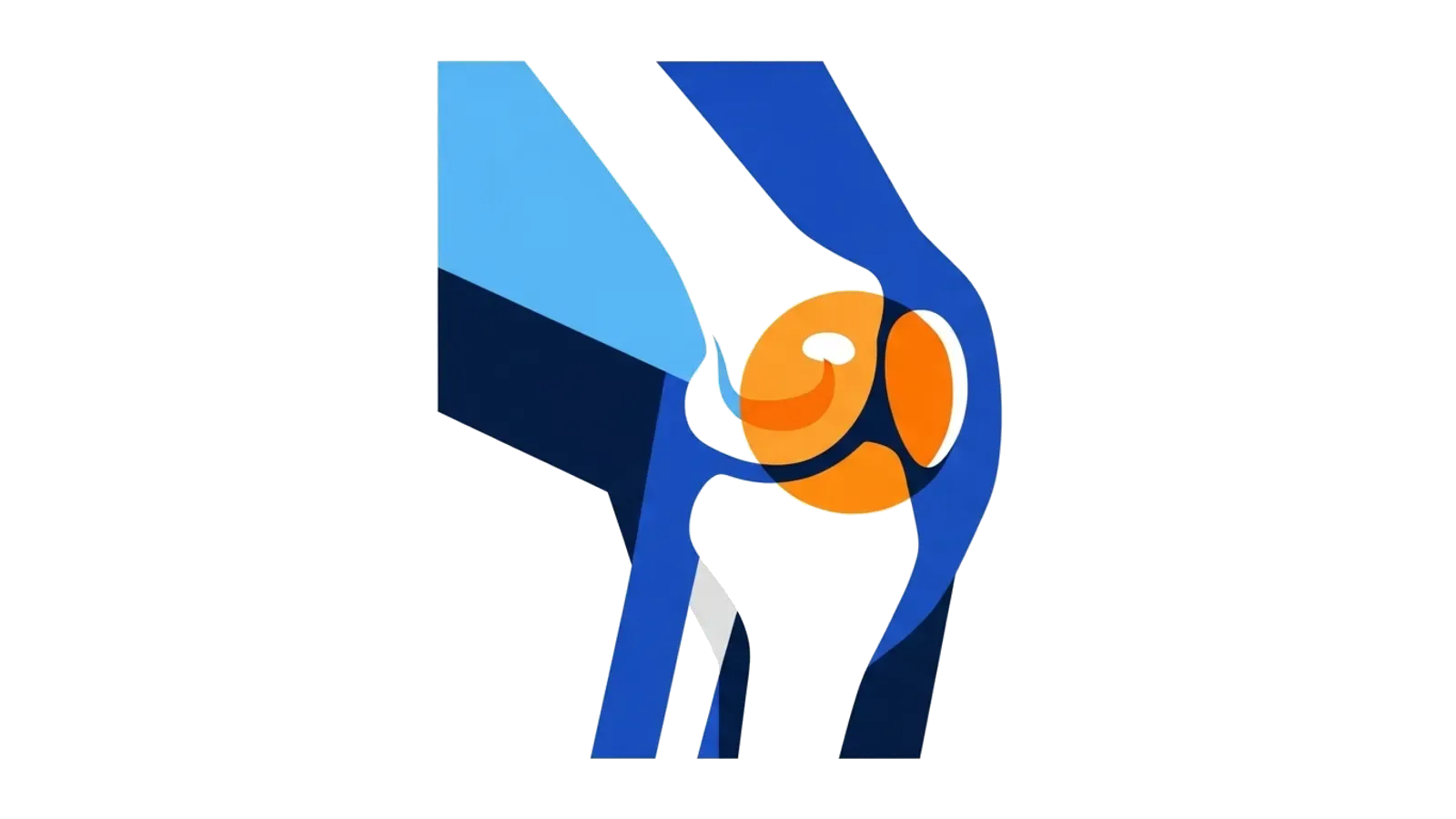
Many runners think that to improve, they just need to run more. That is a mistake. A runner who only runs develops major muscle imbalances: overpowered quads, lazy glutes, no core strength, stiff calves. These imbalances are among the most common breeding grounds of overuse injuries (shin splints, runner's knee, Achilles tendinopathy, IT band syndrome).
The good news: 15 to 20 minutes twice a week are enough to strengthen every muscle chain that matters for running. No equipment, no gym needed. Here are the 6 fundamental exercises, why each one matters for a runner, and how to do them properly.
Why strength work is non-negotiable
Running is an asymmetric, repetitive sport: at each stride, you take about 2 to 3 times your body weight on a single leg (ground reaction force measured in distance runners by Cavanagh and Lafortune, 1980). Over a 30-minute run, that is close to 5,000 impacts per leg. Without muscles able to absorb and return that energy, tendons, bones and joints take the hit. That is exactly how shin splints, runner's knee and Achilles tendinopathy start.
The studies agree. In athletes in general, a meta-analysis of 25 randomized trials (Lauersen et al., 2014) shows that strength training roughly halves overuse injuries. In trained runners, 8 to 12 weeks of strength work improve running economy (you use less oxygen at the same pace) and timed-trial performance (Balsalobre-Fernández et al., 2016; Blagrove et al., 2018). Few interventions offer such a high benefit for the time spent.
How to structure the session
| Parameter | Recommendation |
|---|---|
| Frequency | 2 sessions a week, ideally after an easy run |
| Duration | 15-20 min, not counting the warm-up |
| Format | 2 to 3 sets per exercise, 30 to 60 s of rest |
| Progression | First increase time or reps, then add weight |
| When to avoid it | The day before a hard session or a race |
1. Plank (core)
The foundation exercise. A strong core stabilizes the pelvis at each stride and prevents the sideways "collapse" that overloads knees and hips.
How: resting on your forearms and toes, your body forms a perfectly straight line from ankles to shoulders. Hips neither sagging nor raised. Eyes on the floor. Calm breathing. Tighten your glutes and abs as if bracing for a punch.
Volume: 3 sets of 30 to 60 s. When 60 s gets easy, move to a dynamic plank (lifting one foot at a time) or a side plank (20 to 40 s per side).
Common mistake: hips sagging after 20 s. Three perfect 30-second sets beat one sloppy 90-second set.
2. Two-leg squat
The squat builds the quads, glutes and posterior chain. It is the reference movement for absorbing impact on landing and pushing off.
How: feet shoulder-width apart, toes slightly out. Lower by pushing your hips back, as if sitting on a low chair. Knees track over the feet (they do not cave in). Ideally go down until your thighs are parallel to the floor. Chest up, eyes forward. Drive back up through your heels.
Volume: 3 sets of 12 to 20 reps. To progress: slow the descent (3 seconds), add a pause at the bottom, or hold a loaded backpack.
Common mistake: knees caving inward (valgus). That is exactly what causes runner's knee.
3. Alternating forward lunge
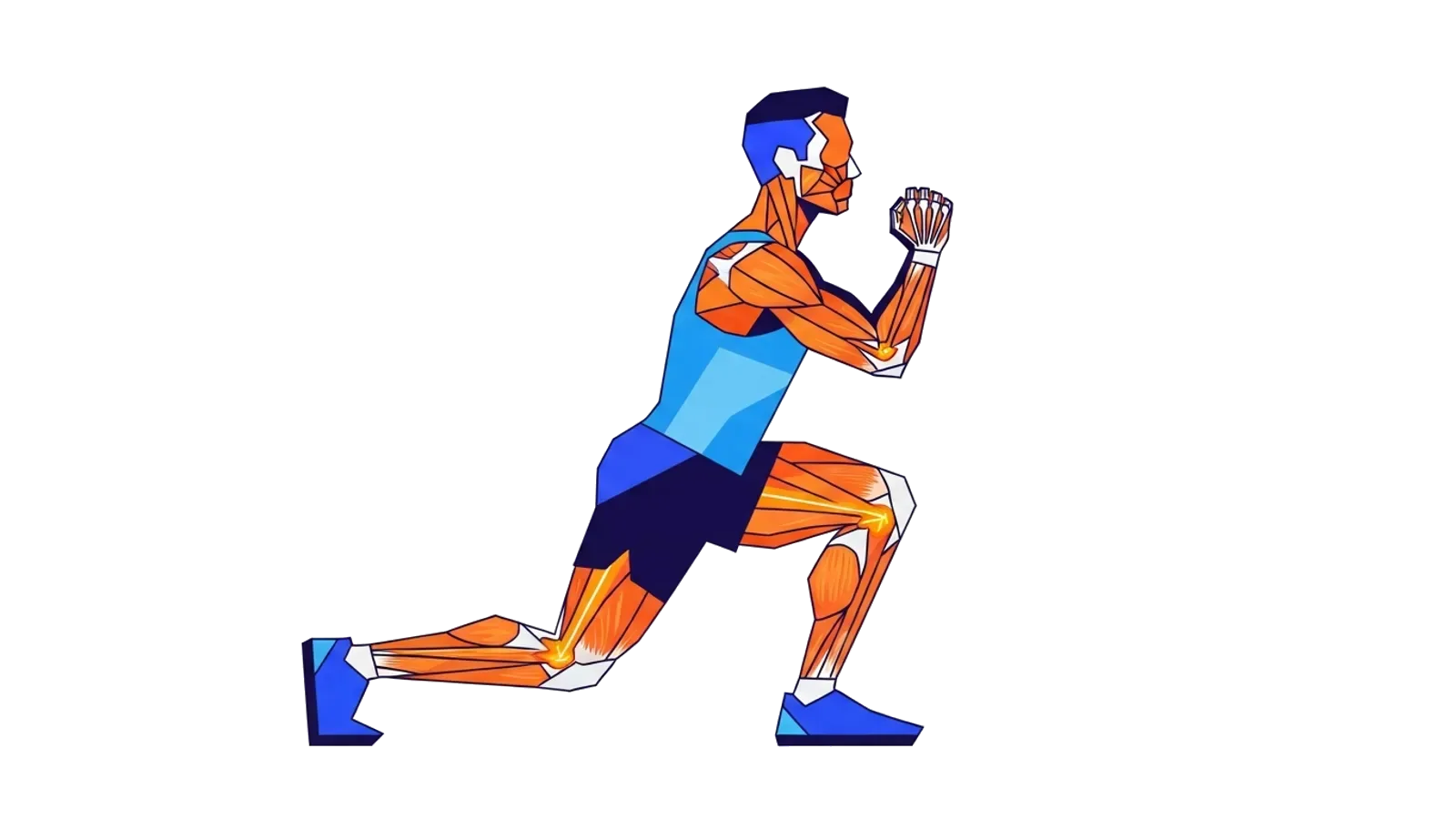
The lunge works one leg at a time, as in running. It reveals and corrects left-right asymmetries that the squat hides.
How: standing, take a big step forward. Lower straight down until the front knee forms a right angle and the back knee nearly touches the floor. The front knee should not travel far past the toes. Chest upright. Push through the front heel to stand back up, then switch legs.
Volume: 3 sets of 10 to 15 reps per leg. Variations: reverse lunge (easier on the knee), walking lunge, jumping lunge for advanced runners.
Common mistake: leaning the torso forward. That shifts the load to the lower back instead of the glutes.
4. Single-leg glute bridge
The glutes are the most neglected muscles among runners. Yet they drive every stride and stabilize the pelvis. Weak glutes force the IT band to compensate: fertile ground for IT band syndrome and runner's knee.
How: lying on your back, one foot flat on the floor with the knee bent, the other leg straight up toward the ceiling. Push through the heel on the floor to lift your hips until shoulder, hip and knee form a straight line. Squeeze the glute hard at the top. Hold 1 second, lower slowly.
Volume: 2 to 3 sets of 10 to 15 reps per leg. To make it harder: put the support foot on a step, or hold a weight on your hip.
Common mistake: overarching the lower back (hips too high). The movement comes from the glutes, not the lower back.
5. Calf raises
The calf (gastrocnemius + soleus) and the Achilles tendon are loaded at every stride. A weak calf-Achilles complex is a direct cause of Achilles tendinopathy and plantar fasciitis.
How: standing, ideally on a step with your heels hanging off. Rise slowly onto the balls of both feet (2 seconds), hold 1 second at the top, then lower even more slowly (3 seconds), letting your heels drop below the step.
Volume: 3 sets of 15 to 20 reps on both feet, then progress to one leg (3×10 per leg). The slow eccentric phase (lowering) matters most.
Common mistake: bouncing and using momentum. The whole point is the slowness of the movement, especially on the way down.
6. Lateral shuffle in a half squat
This exercise specifically targets the hip abductors (gluteus medius), which keep the pelvis stable while the foot is on the ground. It is the best preventive work against IT band syndrome.
How: in a half squat (thighs ideally parallel to the floor, or a little higher), move sideways with small shuffle steps. Knees stay bent the whole time, feet never cross. The pelvis stays steady, without swaying. Take 10 steps to the right, then 10 to the left.
Volume: 3 round trips. With a mini band around the thighs just above the knees, the exercise becomes much harder.
Common mistake: standing up between steps. The whole set is done with bent knees, without bouncing.
A typical week
| Day | Session |
|---|---|
| Monday | Easy run + the 6 exercises (3 sets each) |
| Wednesday | Quality session (intervals, tempo) |
| Friday | Easy run + the 6 exercises (3 sets each) |
| Sunday | Long run |
How long before you see results?
The first neural adaptations appear within 2 to 3 weeks: you will feel more stable and your stride will feel springier. Real gains in strength and running economy come after 8 to 12 weeks of regular practice, the length of the programs studied in the reviews cited in the sources. It is a long-term investment, not a last-minute fix before a race.
The mistake not to make
Do not start strength work the day before a race or in the middle of a heavy training block. Muscles need 48 to 72 hours to recover from a session; doing heavy squats the day before an interval session sabotages both. Bring strength work in at the start of a cycle, while running volume is still reasonable.
Related tools
This information is educational and does not replace the advice of a sports doctor or a physical therapist. It was written by the Tempocito editors and has not been reviewed by a named health professional. The figures rely on the scientific and institutional sources listed at the end of the article.
If pain persists, gets worse, is intense or appears at rest, see a health professional.
Sources
- Lauersen JB, Bertelsen DM, Andersen LB (2014). The effectiveness of exercise interventions to prevent sports injuries: a systematic review and meta-analysis of randomised controlled trials. Br J Sports Med. 2014;48(11):871-877. Link
- Balsalobre-Fernández C, Santos-Concejero J, Grivas GV (2016). Effects of strength training on running economy in highly trained runners: a systematic review with meta-analysis of controlled trials. J Strength Cond Res. 2016;30(8):2361-2368. Link
- Blagrove RC, Howatson G, Hayes PR (2018). Effects of strength training on the physiological determinants of middle- and long-distance running performance: a systematic review. Sports Med. 2018;48(5):1117-1149. Link
- Cavanagh PR, Lafortune MA (1980). Ground reaction forces in distance running. J Biomech. 1980;13(5):397-406. Link