Runner's knee (patellofemoral pain): rehab and return to running
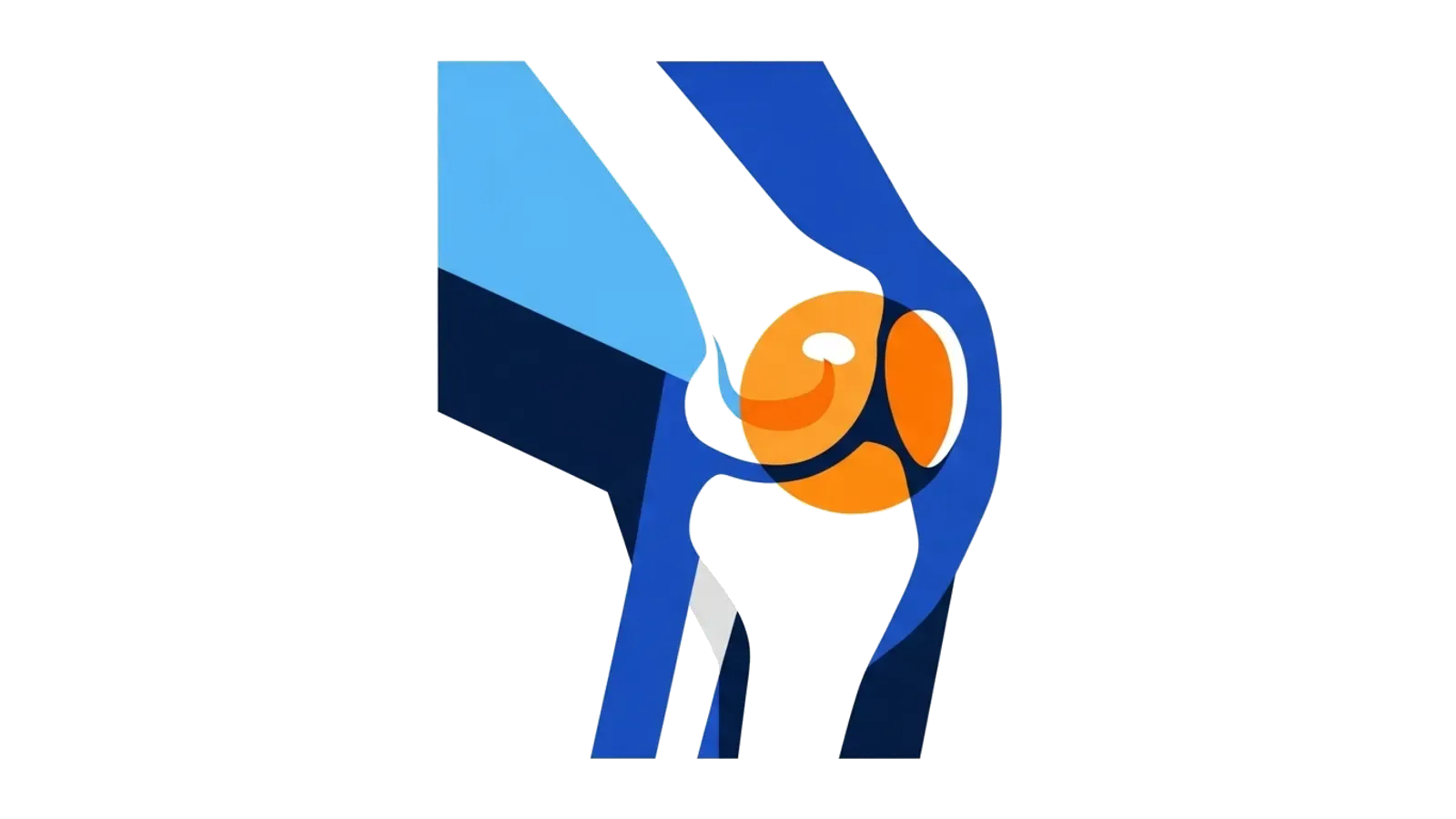
Patellofemoral pain syndrome, better known as runner's knee, is by far the most common knee injury in running. It accounts for nearly 25% of consultations among recreational runners. It affects beginners and experienced runners, men and women alike (women slightly more, because of a wider pelvis-to-knee angle).
The good news: it responds very well to a well-targeted strengthening program. The key is less rest than working the right muscles.
What is runner's knee?
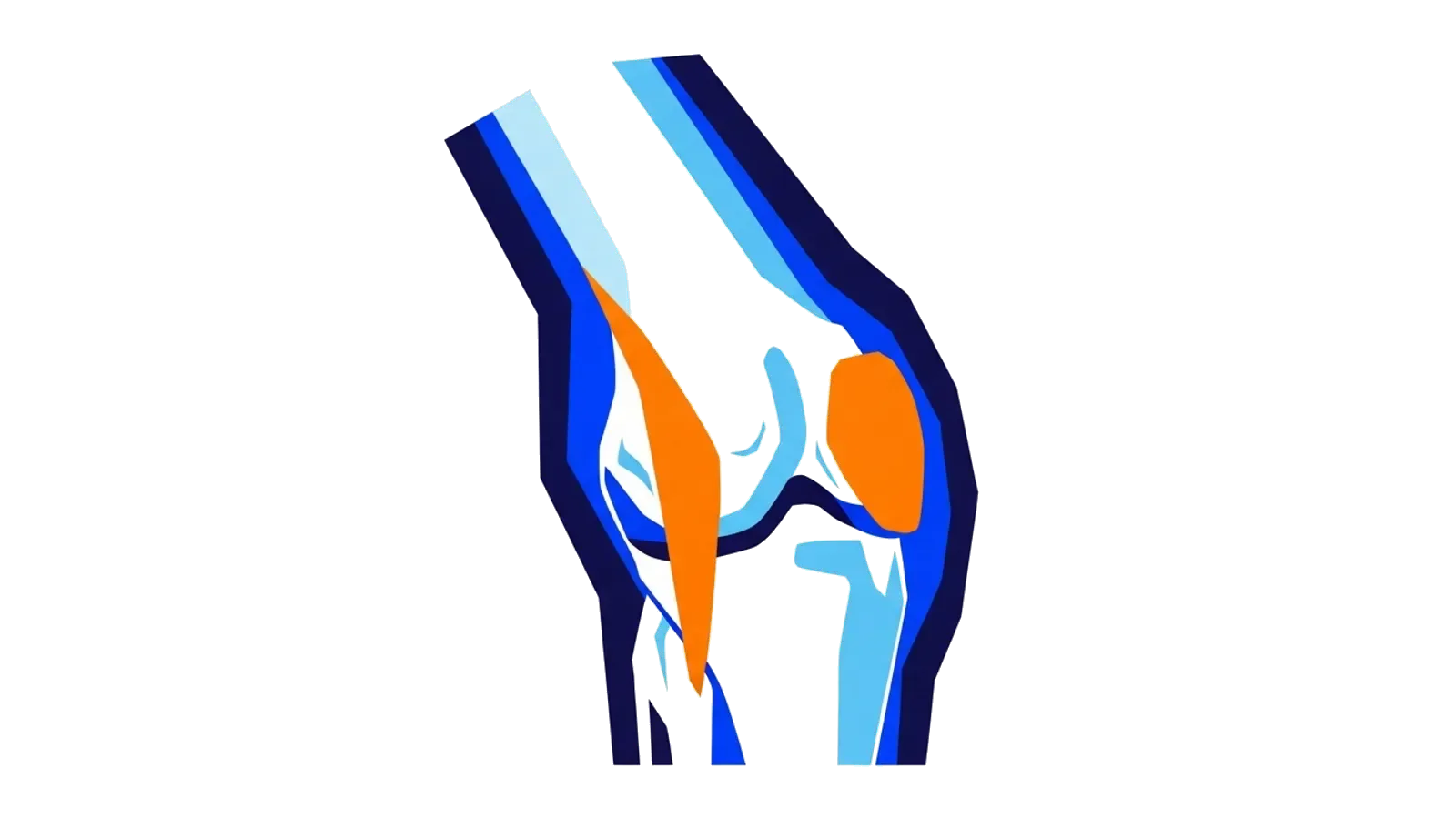
The kneecap (patella) normally glides in a "groove" of the thigh bone each time the knee bends and straightens. When this tracking is disturbed, by poor alignment, a muscle imbalance or overload, the kneecap rubs abnormally on the thigh bone. This repeated friction, thousands of cycles per run, ends up triggering a diffuse pain at the front of or around the knee.
Important: it is not a structural injury (menisci and ligaments are healthy). It is a functional problem, which is why rehab works so well.
Symptoms
- Diffuse pain at the front of the knee, around or behind the kneecap. Hard to point to with one finger.
- Pain on downhills (stairs, descents while running) much more than on uphills.
- Pain after sitting for a long time with the knee bent (movie theater, car, office): the "movie-goer's sign".
- A cracking or grinding sensation when bending and straightening.
- Pain that builds over the miles; rarely right at the start.
- Usually no major swelling (if there is, suspect something else).
Why it happens
| Cause | Mechanism |
|---|---|
| Weak glutes (medius and maximus) | The knee caves inward (dynamic valgus) |
| Weak quads (vastus medialis) | The kneecap is pulled outward |
| A fast rise in volume or downhills | Mechanical overload of the joint |
| Overly long stride + low cadence | Higher peak impact on the knee |
| Flat feet or overpronation | Inward rotation of the shin, knocking the kneecap off track |
| A tight IT band | Sideways pull on the kneecap |
| Cambered surfaces (road edge) | Chronic misalignment |
| Worn shoes | Less cushioning and stability |
What you can do right now
- Cut running: stop or reduce sharply for 7 to 14 days while the irritation settles. Avoid downhills and hard sessions first of all.
- Ice: 10 to 15 minutes after any effort, twice a day in the first days.
- Cross-training: cycling (light gears, saddle high, knee stable, pain-free), deep-water running, swimming. Cycling is usually very well tolerated.
- Start strengthening: the main treatment is not rest, it is active rehab. See the program below.
- Self-massage of the quads and IT band with a roller, 5 minutes per leg, avoiding the kneecap itself.
The priority rehab program
Do it 3 to 4 times a week for at least 6 to 8 weeks. Every exercise must be done without knee pain. If it hurts, reduce the range of motion.
| Exercise | Target | Volume |
|---|---|---|
| Single-leg glute bridge | Gluteus maximus | 3×10 per leg |
| Lateral shuffle in a half squat | Gluteus medius | 3×10 steps per side |
| Clamshell | Gluteus medius | 3×15 per side |
| Partial wall sit (60° at most) | Quads + glutes | 3×30 s |
| Slow step-down from a step | Knee control on the way down | 3×8 per leg |
| Plank | Pelvic stability | 3×30-60 s |
When to see someone
- Pain that lasts more than 3 weeks despite rehab.
- Marked swelling of the knee.
- A feeling of instability (the knee "gives way").
- The knee locking, or very localized pain along the joint line (suspected meniscus injury, to be checked).
- Severe pain that stops you walking normally.
Prevention
- Ongoing strengthening: keep the exercises above in your routine, 1 to 2 times a week, even without pain.
- A target cadence of 170 to 180 steps per minute: it reduces the load on the kneecap by 15 to 20% compared with an overly long stride.
- Gradual downhill work: it is the number one risk factor. Only bring in steep descents once your rehab is solid.
- Avoid running on a camber (always on the same side of the road).
- Replace your shoes every 370 to 500 miles (600 to 800 km).
- For marked pronation: a podiatrist's opinion can help to discuss corrective insoles.
Returning to running
Only return once single-leg exercises (step-down, single-leg bridge) are pain-free. Then follow the 4-week protocol in our article on returning to running after an injury, only on flat ground at a very easy pace. Bring back gentle hills only in week 6, and real downhills even later. Keep up the rehab twice a week throughout your return to training.
The classic mistake
Skipping the exercises because they are "boring" or "too easy". Runner's knee is not fixed by anti-inflammatories, insoles alone or knee braces. It is fixed by patient, regular work on the stabilizing muscles. That is the only treatment with proven long-term effectiveness.
Related tools
This information is educational and does not replace the advice of a sports doctor or a physical therapist. It was written by the Tempocito editors and has not been reviewed by a named health professional. The figures rely on the scientific and institutional sources listed at the end of the article.
If pain persists, gets worse, is intense or appears at rest, see a health professional.
Sources
- Crossley KM, Stefanik JJ, Selfe J, et al. (2016). 2016 Patellofemoral pain consensus statement from the 4th International Patellofemoral Pain Research Retreat. Br J Sports Med. 2016;50(14):839-843. Link
- Collins NJ, Barton CJ, van Middelkoop M, et al. (2018). 2018 Consensus statement on exercise therapy and physical interventions (orthoses, taping and manual therapy) to treat patellofemoral pain. Br J Sports Med. 2018;52(18):1170-1178. Link
- Lankhorst NE, Bierma-Zeinstra SMA, van Middelkoop M (2012). Risk factors for patellofemoral pain syndrome: a systematic review. J Orthop Sports Phys Ther. 2012;42(2):81-94. Link