Shin splints in runners: symptoms, causes and return to running
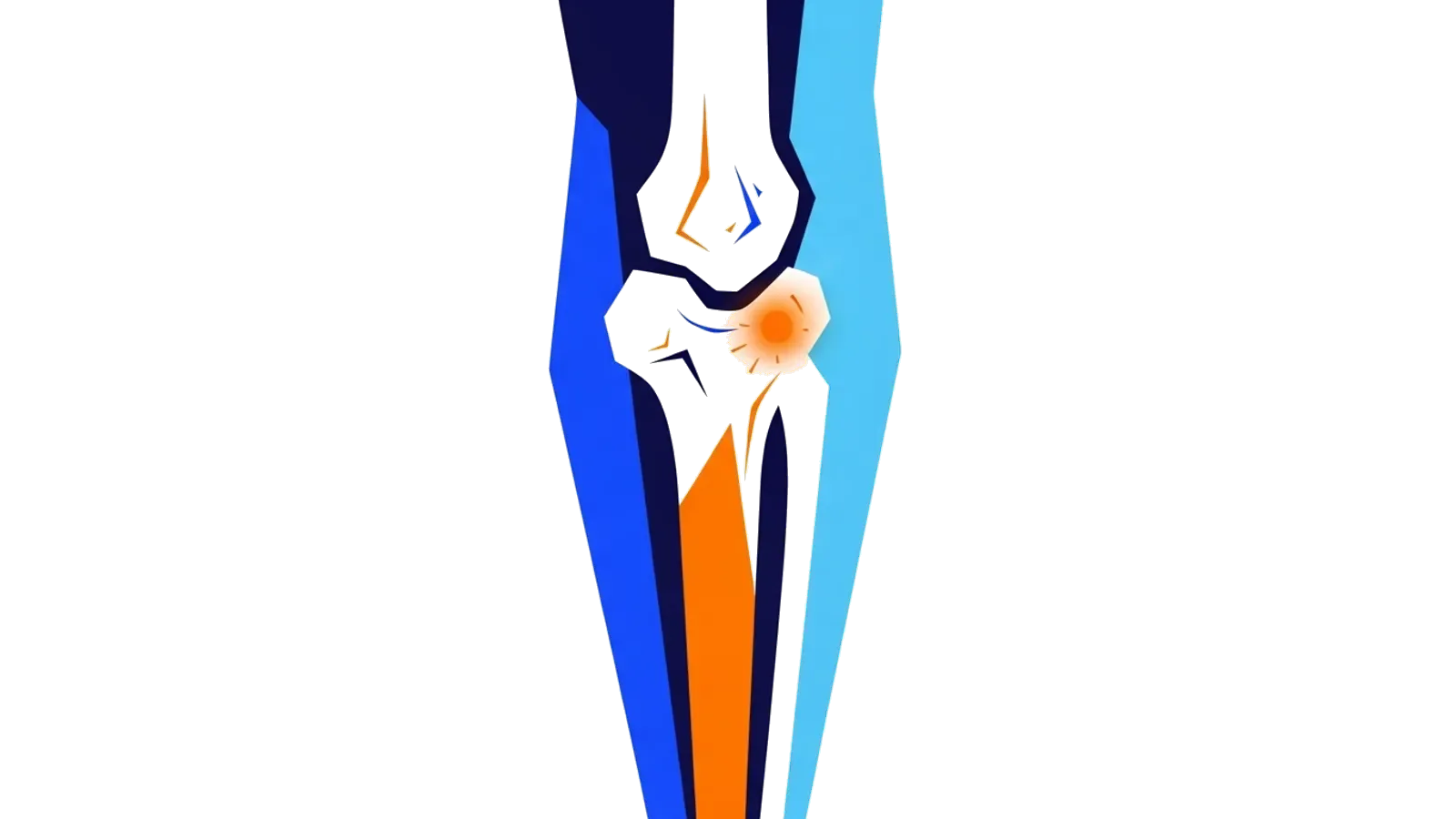
Shin splints, known medically as medial tibial stress syndrome, are one of the most common running injuries, especially among beginners and runners who raise their training volume too quickly. Depending on the study, they affect 5 to 35% of runners (see sources).
The typical pain: along the inner edge of the shin, about halfway down, appearing at the start of a run, sometimes fading during the effort, then coming back stronger at the end and the next day. Caught early, it usually resolves well, even though no treatment has proven clearly more effective than extended rest: managing load remains the foundation.
What are shin splints?
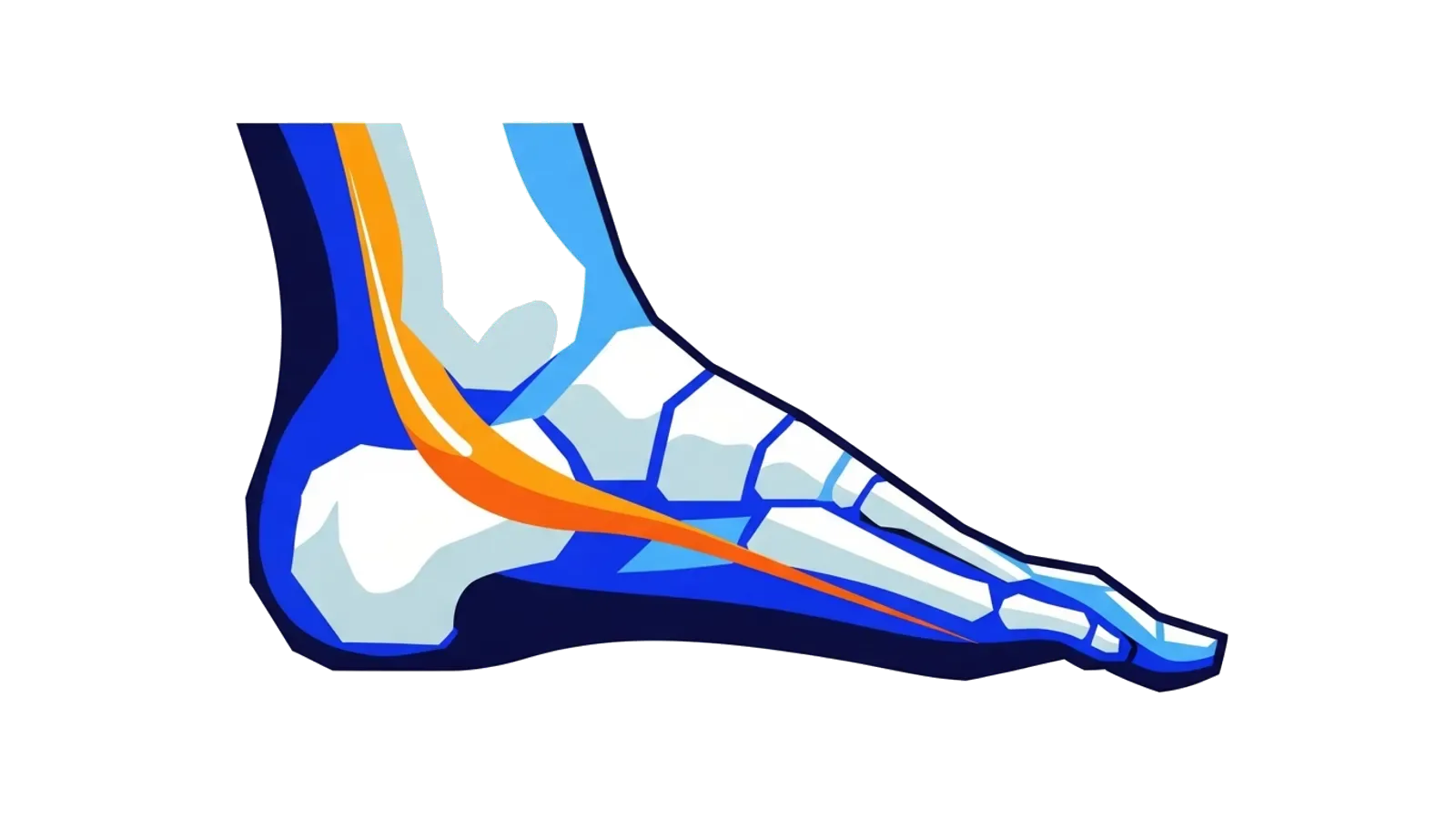
The periosteum is the thin membrane that wraps the bone and is rich in nerve endings. The old French name, periostitis, suggests an inflammation of this membrane along the tibia (the shin bone), but today the condition is classed among a spectrum of tibial bone stress injuries, linked to the repeated pull of the muscles attached there (tibialis posterior, soleus, toe flexors) at each foot strike.
It is neither a fracture nor a muscle tear: it is a sign that the bone and its sheath have not had time to adapt to the load asked of them. It is a typical overuse injury, almost always linked to raising volume or intensity too fast.
Symptoms
- Pain along the inner edge of the shin, over 2 to 6 inches (5 to 15 cm), usually in the lower half of the leg.
- Early on: pain only when running, gone when you stop.
- Later: pain from the first mile, lingering when walking, even at rest.
- Tenderness to touch: firm pressure with a finger on the shin triggers it.
- A feeling of local warmth, sometimes slight swelling.
- Both legs in about half of cases.
Why it happens
Shin splints almost always have several causes. Here are the typical triggers to review:
| Cause | Mechanism |
|---|---|
| Volume raised too fast | +30% in weekly mileage when a sensible limit is +10% |
| Returning after a break | The runner picks up "where they left off" without letting the shin readapt |
| Worn shoes (over 500 miles) or unsuitable shoes | Less cushioning, the shin takes the hit |
| Surface too hard (asphalt) or changing too much | The shin does not adapt to the new stress |
| Too many hill or downhill sessions | Major muscle overload |
| Flat feet or excessive pronation | The tibialis posterior works overtime |
| Weak or stiff calves or shin muscles | Poor shock absorption |
| A heavy heel strike | Impact transmitted straight to the shin |
What you can do right now (self-care)
- Relative rest: stop running for at least 7 to 10 days. This is not negotiable. Running through it always makes it worse.
- Ice: 10 to 15 minutes on the painful area, 2 to 3 times a day, for the first 5 days.
- Cross-training: cycling, swimming, deep-water running, elliptical to maintain fitness without impact.
- Gentle stretching: calves (gastrocnemius and soleus), tibialis anterior, arch of the foot, twice a day.
- Self-massage: a roller or ball under the calf and along the front of the shin, 5 minutes per leg.
- Check your shoes: beyond 370 to 500 miles (600 to 800 km), cushioning drops sharply. Replace them if needed.
When to see a professional
See a sports doctor or a physical therapist if:
- Pain lasts more than 10 days despite rest.
- Pain is very localized (under an inch) and present even at night: risk of a stress fracture, which requires imaging.
- Pain is severe when walking.
- You have marked swelling or redness.
- It is your second episode of shin splints in less than 6 months.
How to prevent a relapse
- The 10% rule: never raise weekly volume by more than 10% over the previous week.
- Lighter week: every 3 to 4 weeks, cut volume by 30% to allow bone adaptation.
- Calf and shin strengthening: slow calf raises (3×15) and walking on your toes (3×30 s), twice a week.
- Vary surfaces: alternate asphalt, dirt, packed grass and track.
- Stride: aim for a cadence of about 170 to 180 steps per minute. Overly long strides amplify the impact on the shin.
- Suitable shoes: for marked pronation, stability shoes can reduce the strain on the tibialis posterior. Ask for advice in a specialist running store.
Returning to running gradually
After shin splints, the return must be supervised. Follow the 4-week protocol described in our dedicated article on returning to running after an injury, strictly respecting this rule: no pain during the session, no pain in the following 24 hours. At the slightest return of pain, go back one week in the protocol.
A typical post-shin-splints plan:
- Days 1-7 after returning: 3 sessions of 20 min alternating walking and a very slow jog, on soft ground.
- Week 2: 3 sessions of 25 min of gentle continuous running.
- Week 3: 3 sessions of 30 min, one with a few short strides.
- Week 4+: very gradual return to your usual volume, never more than +10% per week.
The classic trap
"The pain was gone in 3 days, I can go back to normal." No. An irritated periosteum takes 4 to 6 weeks to settle for good and get stronger. The absence of pain only means the acute phase has passed, not that the bone is ready to take 30 miles a week again. Respecting the return protocol is what makes the difference between healing and relapse.
Related tools
This information is educational and does not replace the advice of a sports doctor or a physical therapist. It was written by the Tempocito editors and has not been reviewed by a named health professional. The figures rely on the scientific and institutional sources listed at the end of the article.
If pain persists, gets worse, is intense or appears at rest, see a health professional.
Sources
- Galbraith RM, Lavallee ME (2009). Medial tibial stress syndrome: conservative treatment options. Curr Rev Musculoskelet Med. 2009;2(3):127-133. Link
- Winters M, Eskes M, Weir A, Moen MH, Backx FJG, Bakker EWP (2013). Treatment of medial tibial stress syndrome: a systematic review. Sports Med. 2013;43(12):1315-1333. Link
- Newman P, Witchalls J, Waddington G, Adams R (2013). Risk factors associated with medial tibial stress syndrome in runners: a systematic review and meta-analysis. Open Access J Sports Med. 2013;4:229-241. Link
- Reshef N, Guelich DR (2012). Medial tibial stress syndrome. Clin Sports Med. 2012;31(2):273-290. Link