IT band syndrome in runners: treatment and return to running
Iliotibial band syndrome, or ITBS, is the most typical knee injury of distance runners. It is the very picture of an injury that strikes "all of a sudden", in the middle of a long run, and makes you limp home.
Fortunately, it heals very well with proper treatment. You still need to identify the real culprit, which is not the band itself but weak hip stabilizers.
What is the iliotibial band?
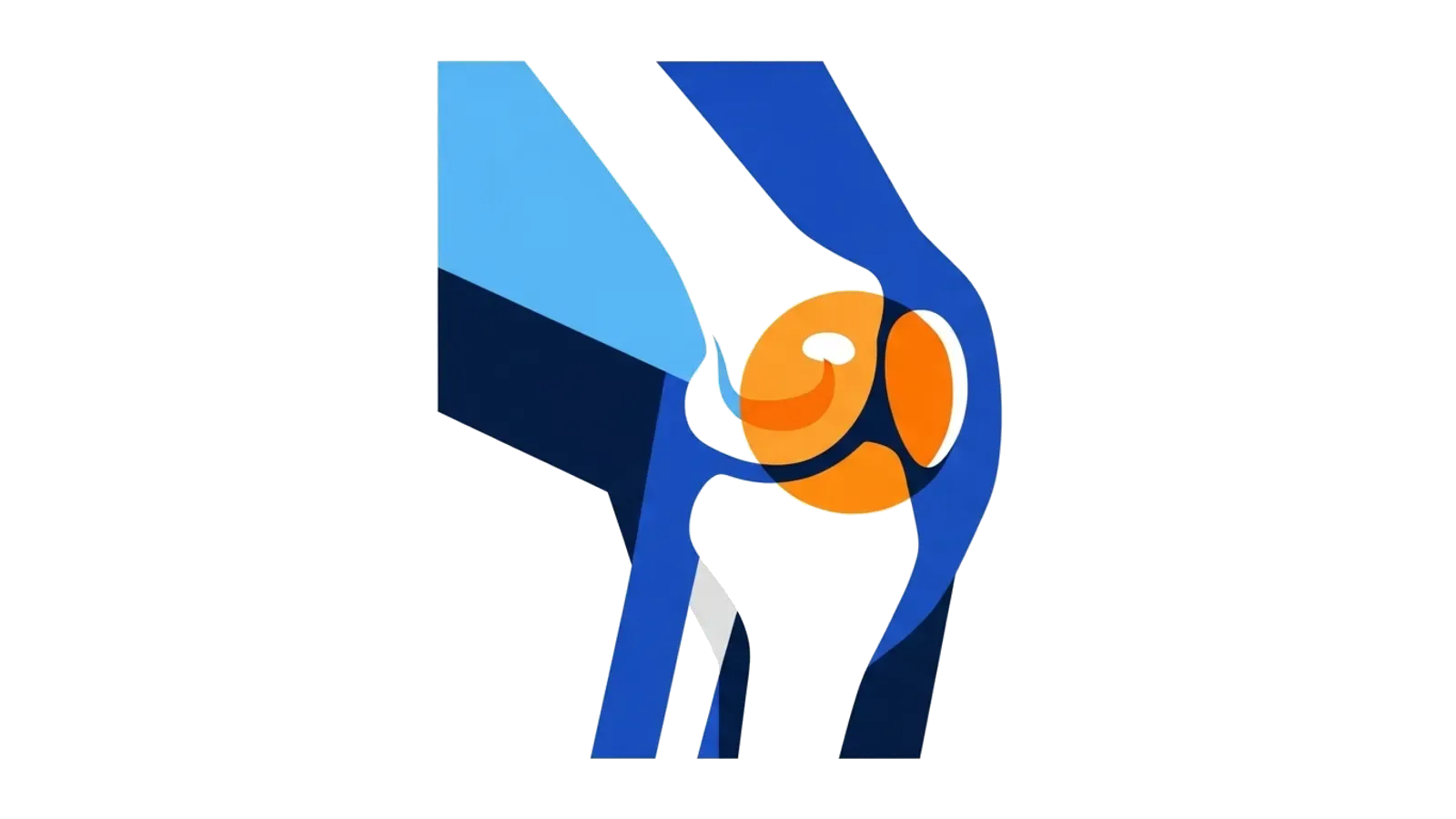
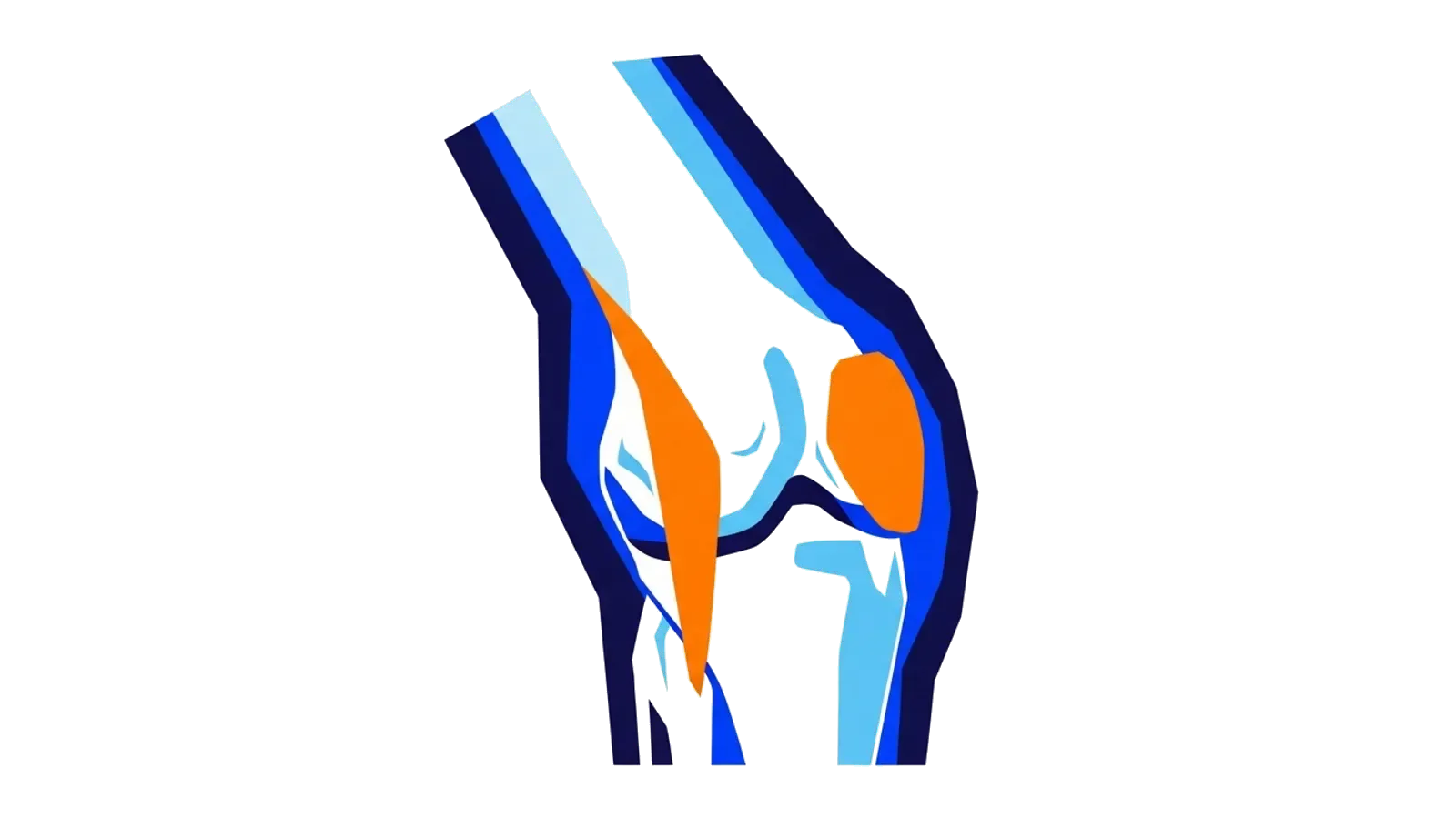
The iliotibial band (or IT tract) is a long fibrous band running from the hip down to the knee, along the outside of the thigh. It extends the tensor fasciae latae (TFL) and part of the gluteus maximus. Each time the knee bends and straightens, it rubs over the outer knob of the thigh bone, just above the joint.
As long as everything is balanced, this friction has no consequence. But when the glutes are weak or the pelvis is no longer stable, the band tightens and the friction becomes irritating; the French even nickname it the "windshield wiper syndrome".
Typical symptoms
- Precise pain on the outside of the knee, just above the joint line. The runner can usually point to it with a finger.
- Sudden onset during a run: "fine, fine... then suddenly it hurts and I cannot run anymore".
- Pain that typically appears after 15 to 30 minutes of running, sometimes at exactly the same mile every run.
- Clearly worse on downhills, on stairs, and when the foot lands (the absorption phase).
- Quick relief when you stop running, sometimes complete disappearance... until the next run.
- Advanced stage: pain when walking, even when standing for a long time.
Why it happens
| Cause | Mechanism |
|---|---|
| Weak glutes (gluteus medius above all) | The pelvis drops on the opposite side, stretching the band |
| A sudden rise in volume / long run too soon | The band is not adapted to the length of the effort |
| Too much downhill | The band rubs much more going downhill |
| Running on a camber (sloping road edge) | Chronic pelvic misalignment |
| A stride that is too narrow (one foot in front of the other) | Overload of the lateral chain |
| Shoes worn on the outside | Knee stability compromised |
| Bow legs (genu varum) | More mechanical stress on the band |
What you can do right now
- Stop running in the acute phase: 5 to 10 days depending on how much it hurts.
- Ice: 10 to 15 minutes on the outside of the knee, twice a day in the first days.
- Self-massage with a foam roller along the outside of the thigh, from knee to hip: 5 minutes per leg, slowly, lingering on tight spots. Uncomfortable but very effective.
- IT band stretch: standing, cross the painful leg behind the other and lean your upper body to the opposite side while keeping your hips steady. 30 s × 3.
- TFL and gluteus medius stretch: sitting on the floor, cross your ankle over the opposite knee and gently pull the knee toward your chest.
- Cross-training: swimming and deep-water running are perfect. Cycling is trickier (friction); try it gradually.
- Start glute strengthening right away (see the program below). It is the real underlying treatment.
The specific strengthening program
3 to 4 times a week for at least 6 to 8 weeks. Without knee pain.
| Exercise | Main target | Volume |
|---|---|---|
| Clamshell with a mini band | Gluteus medius | 3×15 per side |
| Single-leg glute bridge | Gluteus maximus | 3×12 per leg |
| Lateral shuffle in a half squat (mini band) | Gluteus medius under load | 3 round trips of 10 steps |
| Side-lying leg raise | Gluteus medius | 3×15 per side |
| Partial single-leg squat | Pelvic stability on one leg | 3×8 per leg |
| Side plank | Lateral chain + glutes | 3×30 s per side |
When to see someone
- Pain that lasts more than 3 weeks despite care and strengthening.
- Pain that no longer eases with rest (present when walking or at night).
- Marked local swelling.
- Repeated relapses at every attempt to return.
A physical therapist can refine the program, add manual techniques (shockwave, soft-tissue work) and correct specific biomechanical faults. In some chronic cases, a sports doctor's opinion may be needed.
Prevention
- Regular glute strengthening: twice a week, as a routine, for life. It is the number one preventive measure.
- Gradual long runs: no more than +10% in duration per week, especially in the 60 to 90-minute range where the band starts to tire.
- Limit downhill work when returning and during a marathon build.
- Switch sides of the road to avoid a constant camber.
- A target cadence of 170-180 steps per minute with a stride that is not too narrow: picture two railway tracks rather than a tightrope.
- Regular self-massage of the lateral chain with a roller, 1 to 2 times a week, as maintenance.
- Replace your shoes as soon as they wear on the outside.
Returning to running
Only return once you tolerate 30 minutes of brisk downhill walking with no pain at all, and single-leg exercises are pain-free. Follow the 4-week protocol in our article on returning to running after an injury, only on flat ground. Strictly avoid downhills for the first 6 weeks back. Keep the strengthening program 3 times a week throughout your return to training.
The trap to avoid
Many runners keep stretching or massaging the band without ever strengthening their glutes. The result: the pain comes back at every attempt to return. The band is not the culprit, just the messenger. As long as the muscles that should stabilize the pelvis stay weak, the band will keep compensating, and the syndrome will keep coming back. Glute strengthening is non-negotiable.
Related tools
This information is educational and does not replace the advice of a sports doctor or a physical therapist. It was written by the Tempocito editors and has not been reviewed by a named health professional. The figures rely on the scientific and institutional sources listed at the end of the article.
If pain persists, gets worse, is intense or appears at rest, see a health professional.
Sources
- Strauss EJ, Kim S, Calcei JG, Park D (2011). Iliotibial band syndrome: evaluation and management. J Am Acad Orthop Surg. 2011;19(12):728-736. Link
- Fairclough J, Hayashi K, Toumi H, et al. (2006). The functional anatomy of the iliotibial band during flexion and extension of the knee: implications for understanding iliotibial band syndrome. J Anat. 2006;208(3):309-316. Link
- Aderem J, Louw QA (2015). Biomechanical risk factors associated with iliotibial band syndrome in runners: a systematic review. BMC Musculoskelet Disord. 2015;16:356. Link