Plantar fasciitis in runners: treatment and return to running
Plantar fasciitis, sometimes wrongly called a "heel spur", is one of the most frustrating running injuries. Not so much because of how much it hurts, but because of how sneaky it is: the pain sometimes fades during the day, then comes back hard every morning, for weeks or even months if it is not managed properly.
The good news: with well-run treatment, 90% of cases heal within 6 to 12 months without any invasive procedure. You still have to start early and do it right.
What is plantar fasciitis?
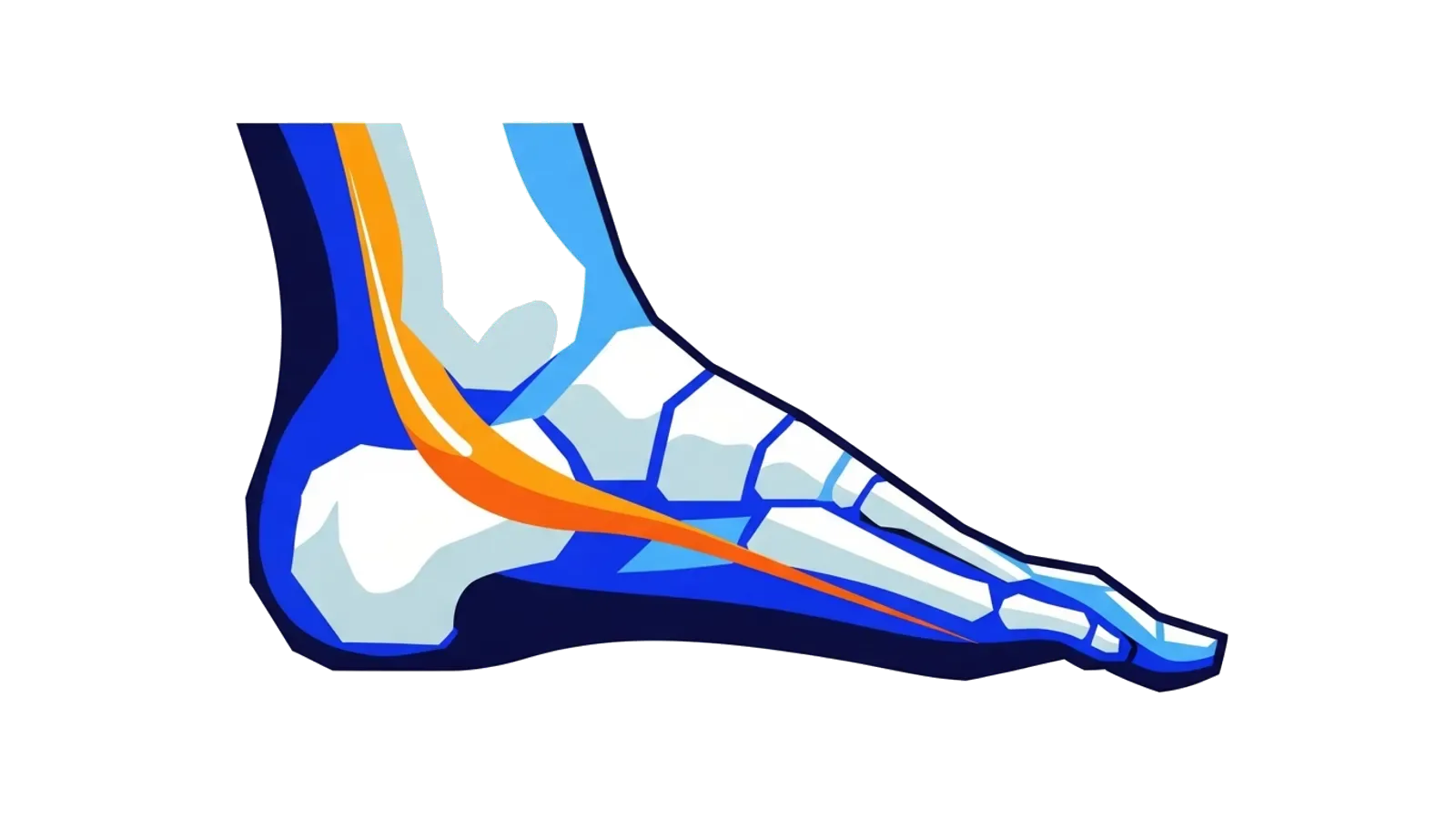
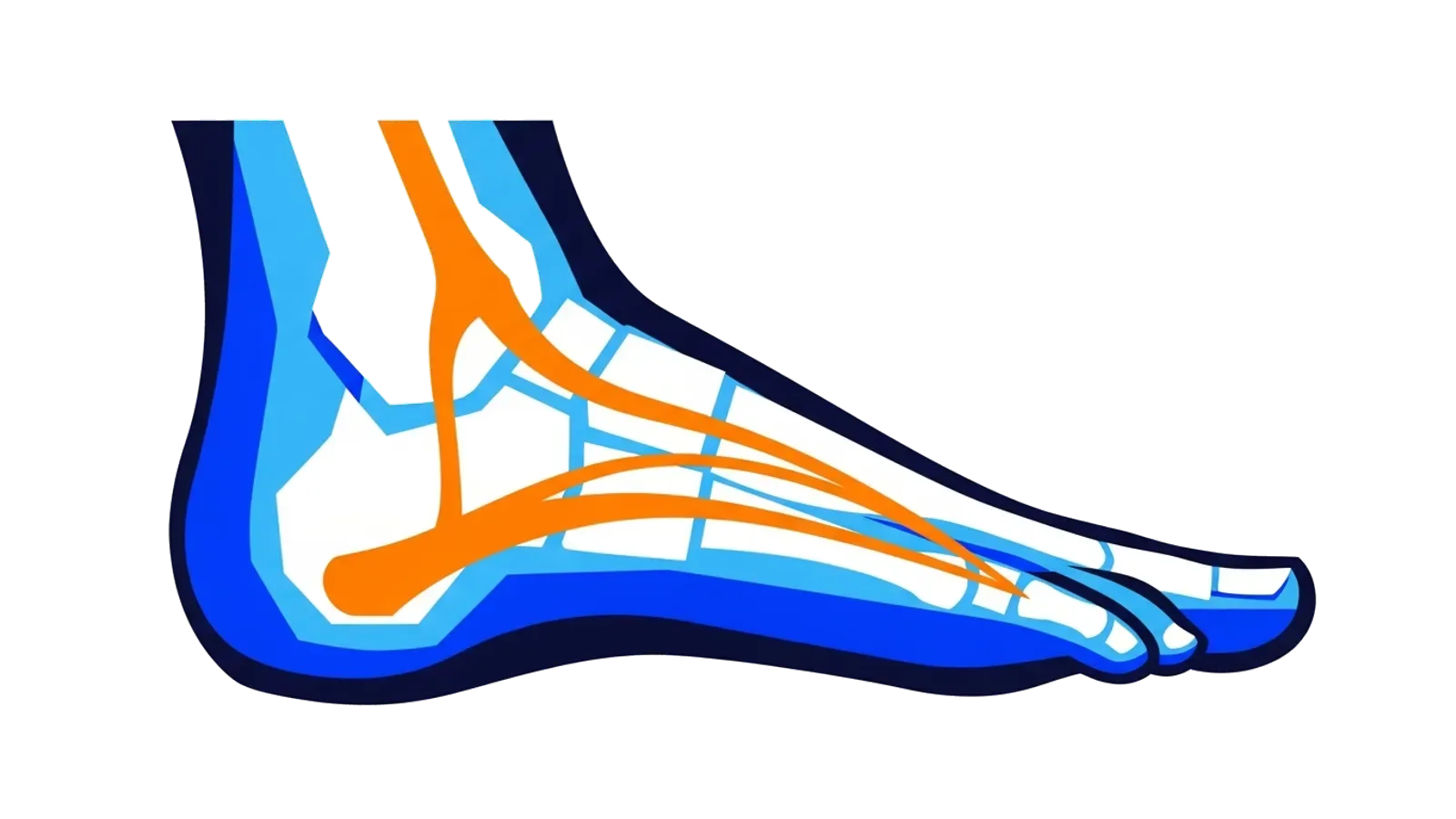
The plantar fascia is a thick fibrous band running from the heel bone (calcaneus) to the base of the toes. It supports the arch like the string of a bow and plays a major role in push-off at each stride.
Plantar fasciitis is an inflammation, then degeneration of this band, most often where it attaches to the heel. It is not a "bit of bone" growing (the heel spur seen on X-rays is usually a consequence, not a cause of the pain). It is the fibrous tissue itself that hurts.
Typical symptoms
- Pain under the heel, often slightly forward and to the inside, when pressed.
- Pain at its worst with the first steps in the morning or after sitting for a long time. The classic feeling: "like stepping on a thumbtack".
- Pain eases after a few minutes of walking, but returns at the end of the day or after exercise.
- Made worse by walking barefoot, standing for a long time, and of course running.
- Usually one foot (75% of cases), sometimes both.
Why it happens
| Cause | Mechanism |
|---|---|
| A sudden rise in mileage | Mechanical overload of the fascia |
| Stiff calves | Repeated pull on the fascia through the heel bone |
| Flat or very high-arched feet | Poor distribution of stress |
| Excess weight or rapid weight gain | More load at every step |
| A job on your feet (retail, healthcare, restaurants) | Constant strain, no recovery |
| Flat or overly soft everyday shoes | No arch support |
| Hard surfaces (asphalt) with no variety | The fascia does not adapt |
| Age between 40 and 60 | Reduced tissue elasticity |
What you can do right now
- Cut running immediately: 2 to 4 weeks off in the acute phase. Avoid walking barefoot at home too.
- Ice: roll your foot on a frozen water bottle for 10 to 15 minutes, twice a day.
- Calf stretches morning and evening: facing a wall, back leg straight with the heel down, 30 seconds × 3 per leg. Add a bent-knee version for the soleus.
- A specific fascia stretch: sitting down, put a hand under the toes of the painful foot and pull them toward you. Hold 30 seconds, 3 times. Do it before putting your foot down in the morning: it is the most effective measure against first-step pain.
- Arch self-massage: roll your arch over a tennis or massage ball, 5 minutes twice a day. Comfortable pressure, no sharp pain.
- Silicone heel cups in all your shoes (running and everyday) during the acute phase.
- Supportive shoes at all times, including at home. Flat flip-flops and walking barefoot are off limits during recovery.
When to see someone
- Pain that persists after 4 to 6 weeks of well-run self-care.
- Pain that gets worse despite rest.
- Pain that wakes you at night (a warning sign).
- A sudden snapping feeling with intense pain (suspected rupture of the fascia: urgent).
- Diabetes, rheumatoid arthritis or a known vascular condition: get medical advice from the start.
The professional (sports doctor, physical therapist, podiatrist) may prescribe physiotherapy, shockwave therapy (very effective in chronic forms) or custom orthotics suited to your feet.
Prevention
- Daily calf and fascia stretches, even when nothing hurts. 5 minutes morning and evening.
- Intrinsic foot strengthening: "short foot" exercises (lifting the arch without curling the toes), 3×10 per foot, 3 times a week.
- Eccentric calf strengthening (slow calf raises): 3×15, twice a week.
- Good running shoes with proper arch support, replaced every 370 to 500 miles (600 to 800 km).
- Varied surfaces: alternate asphalt, dirt and packed grass. Avoid long sessions on very hard ground.
- Weight management: every extra pound adds 3 to 4 pounds of stress at each stride.
Returning to running
Return when your first morning steps no longer hurt and you tolerate 30 minutes of brisk walking without discomfort. Then follow the 4-week protocol in our article on returning to running after an injury, only on soft, flat ground, at a very easy pace. Keep the heel cups for the first 4 to 6 weeks of running.
Key point: keep stretching the fascia and calves even once it no longer hurts. Plantar fasciitis comes back very easily in runners who stop their preventive care.
The "it will pass" trap
Plantar fasciitis does not "pass" on its own in a runner who keeps running. It slowly turns chronic, which is much harder to treat and can keep you off for months. Better 4 weeks of cross-training now than 8 months of complete rest later.
Related tools
This information is educational and does not replace the advice of a sports doctor or a physical therapist. It was written by the Tempocito editors and has not been reviewed by a named health professional. The figures rely on the scientific and institutional sources listed at the end of the article.
If pain persists, gets worse, is intense or appears at rest, see a health professional.
Sources
- Martin RL, Davenport TE, Reischl SF, et al. (2014). Heel Pain — Plantar Fasciitis: Revision 2014. Clinical Practice Guidelines. J Orthop Sports Phys Ther. 2014;44(11):A1-A33. Link
- DiGiovanni BF, Nawoczenski DA, Lintal ME, et al. (2003). Tissue-specific plantar fascia-stretching exercise enhances outcomes in patients with chronic heel pain. J Bone Joint Surg Am. 2003;85(7):1270-1277. Link
- Trojian T, Tucker AK (2019). Plantar Fasciitis. Am Fam Physician. 2019;99(12):744-750. Link