Recovery after a race: the complete guide

Crossing the finish line is not the end of the race: it is the start of recovery, and how you handle the hours and days that follow decides how quickly you get your legs back, whether you avoid the "after" injury, and how much you benefit from the adaptations the effort has just triggered. This guide explains what to do in the first 30 minutes, the next 48 hours and the following weeks after a 10K, a half marathon or a marathon.
What happens in your body after a race
A long race leaves measurable marks. Muscle and liver glycogen stores are largely emptied. You have lost water and sodium through sweat, often 1 to 3% of your body weight. Above all, muscle fibers show micro-damage, all the greater as the distance is long and the course hilly: biopsies taken from marathoners showed muscle fiber damage still visible several weeks after the race, with repair spread over several weeks (Warhol et al., 1985). Finally, the immune system is temporarily weakened for a few hours to a few days, which explains the colds so common in the week after a marathon.
Understanding this helps you accept the obvious: you do not recover from a marathon in three days, even once your legs stop hurting.
Recommended recovery time by distance
These delays are benchmarks from coaching practice, not medical norms. They vary with your level, your age, the real intensity of the race and your training history.
| Distance | Full or active rest | Back to easy runs | Back to intensity | Next race at the same level |
|---|---|---|---|---|
| 5K | 1-2 days | From day 2 or 3 | 5-7 days | 2-3 weeks |
| 10K | 2-3 days | Day 3 to 5 | 7-10 days | 3-4 weeks |
| Half marathon | 3-5 days | Day 5 to 7 | 10-14 days | 4-6 weeks |
| Marathon | 5-10 days | Day 7 to 14 | 3-4 weeks | 8-12 weeks (2 to 3 marathons a year at most) |
A benchmark often cited by coaches: one "easy" recovery day per kilometer raced (about 1.6 days per mile) before returning to full training, about 10 days for a 10K and 3 to 4 weeks for a marathon. It is cautious, but reflects the real time tissues need to repair.
The first 30 minutes: the three Rs
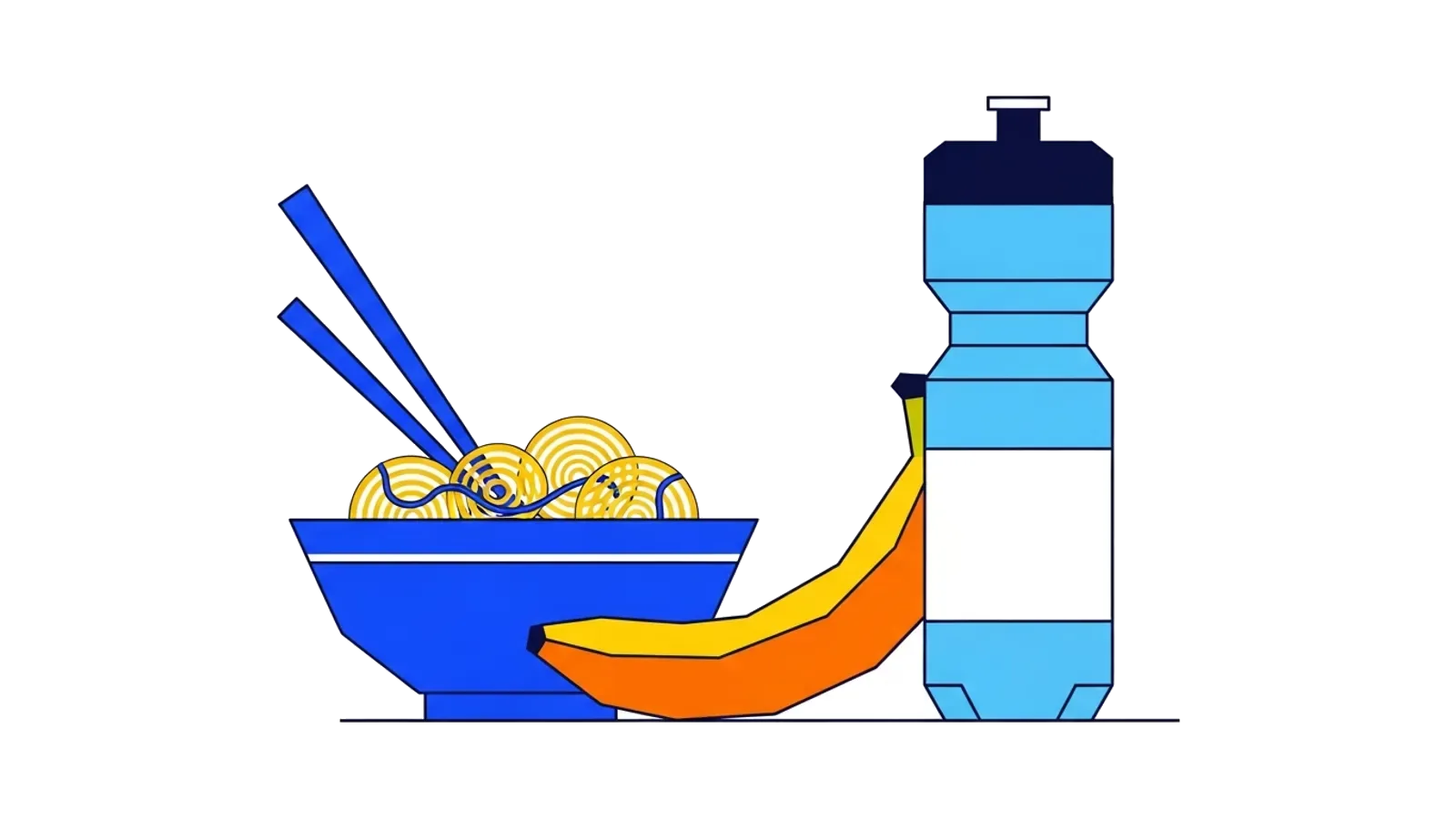
The period right after the finish is the most effective to kick-start recovery. Three priorities, which sports nutritionists sum up as "rehydrate, refuel, repair":
- Rehydrate: the ACSM recommends drinking about 1.5 L for each kilo lost during the effort (about 24 oz per pound), spread over the following hours rather than all at once, ideally with sodium (recovery drink, salty meal) to retain the water (Sawka et al., 2007). If you did not weigh yourself, drink until your urine is clear.
- Refuel with carbohydrate: glycogen resynthesis is fastest in the first hours. The joint ACSM / Academy of Nutrition and Dietetics position (2016) cites 1 to 1.2 g of carbohydrate per kg per hour for the first 4 hours when fast recovery is needed, 70 to 85 g per hour for 154 lb (70 kg). If your next session is three days away, it is less urgent: a normal carb-rich meal within two hours does the job.
- Repair the muscles: 20 to 25 g of good-quality protein in the hours after the effort stimulates muscle protein synthesis (Kerksick et al., 2017; ACSM, 2016). A glass of chocolate milk, a yogurt with fruit, a ham or cream cheese sandwich do the job simply.
Add 10 to 15 minutes of walking for a gradual cool-down while your heart rate comes down. The full meal can wait until your appetite returns, often an hour or two after a marathon.
The next 48 hours
| When | After a 10K | After a marathon |
|---|---|---|
| Race evening | A normal meal rich in carbs and protein, hydration | Same, in several small meals if appetite is low; early night |
| Day 1 | Walk or very easy 20-30 min jog | Walk 20-30 min, no running; lukewarm shower or bath |
| Day 2 | Easy 30-40 min run | Walking, easy cycling or swimming for 20-30 min |
| Days 3 to 5 | Back to normal training, no intensity | First very slow 20-30 min run around day 4 or 5, only if soreness has gone |
On recovery techniques themselves, a meta-analysis of 99 studies (Dupuy et al., 2018) concludes that massage is the most effective method to reduce soreness and perceived fatigue, followed by compression garments and cold-water immersion; active recovery (walking, very light jogging) also lowers inflammation markers. Passive stretching, on the other hand, showed no notable effect on soreness. Keep it for comfort, without trying to "stretch out the pain".
Sleep, the number one lever
Most tissue repair happens during deep sleep. The nights after a long race are often restless (aches, excitement, caffeine from gels): make up for it by going to bed earlier for several days, napping if you can, and cutting alcohol, which fragments sleep and slows glycogen resynthesis. A week of extra sleep after a marathon beats any supplement.
Returning to training without breaking everything
The return should reverse the logic of the build: first frequency, then volume, finally intensity. After a marathon, the second week is 2 to 3 easy runs of 30 to 45 minutes; the third brings back a longer run of 60 to 75 minutes and a light tempo session; the fourth can include short intervals again. If localized pain appears or lasts more than a few days, see our guide to returning to running after an injury and do not hesitate to see a health professional.
This is also when supercompensation happens: as long as you respect this unloading period, you come out of the race stronger than you went in. Returning too early cancels this benefit and turns normal fatigue into an overuse injury.
Mistakes to avoid
- Celebrating with alcohol before eating and drinking water: dehydration and sleep suffer.
- Sitting still in a car or train for three hours right after the race: walk a little every 45 minutes.
- Going back to intervals as soon as soreness fades: deep muscle repair takes longer than the pain.
- Racing back to back: two marathons a month apart are possible for some experienced runners, but rarely a good way to improve.
- Stopping completely for three weeks: active recovery works better than total rest, and the return will be less painful.
Finally, use the period after a race to take stock: your actual pace, compared with your goal on the 10K pace calculator or the marathon calculator, will tell you whether the next build should focus on endurance or speed.
FAQ: recovery after a race
How long does it take to recover from a marathon?
Count 3 to 4 weeks before returning to full training with intensity, and 8 to 12 weeks before another long race at the same level. Soreness fades in 3 to 5 days, but muscle micro-damage takes several weeks to repair, and general fatigue often lasts longer than your legs suggest.
Should you run the day after a race?
After a 5K or 10K, a very easy 20 to 30-minute jog the next day helps recovery. After a half or a marathon, prefer walking, easy cycling or swimming for 2 to 4 days: the impact of running on damaged muscles delays repair and increases injury risk.
What should I eat right after a race?
Within 30 to 60 minutes, a snack combining carbohydrate and protein: chocolate milk, yogurt and a banana, a ham sandwich or a recovery bar. Aim for about 1 g of carbohydrate per kg of body weight and 20 to 25 g of protein, then a full meal within two hours. Drink in small amounts, with a little salt.
Does stretching help recovery after a race?
Scientific data show no effect of passive stretching on soreness or muscle recovery. It is not harmful if it stays gentle, but massage, light active recovery, compression and above all sleep are more effective. Avoid intense stretching of damaged muscles in the 48 hours after a long race.
Is an ice bath useful after a marathon?
Cold-water immersion (50 to 59 °F, 10 to 15 °C, for 10 to 15 minutes) moderately reduces soreness and fatigue over 24 to 48 hours. It is useful if you have to back up quickly, but some studies suggest it may blunt long-term muscle adaptations. After a goal race, a lukewarm bath and a good night often do just as well.
Related tools
This information is educational and does not replace the advice of a sports doctor or a physical therapist. It was written by the Tempocito editors and has not been reviewed by a named health professional. The figures rely on the scientific and institutional sources listed at the end of the article.
If pain persists, gets worse, is intense or appears at rest, see a health professional.
Sources
- Thomas DT, Erdman KA, Burke LM (American College of Sports Medicine, Academy of Nutrition and Dietetics, Dietitians of Canada) (2016). Joint Position Statement: Nutrition and Athletic Performance. Med Sci Sports Exerc. 2016;48(3):543-568. Link
- Sawka MN, Burke LM, Eichner ER, Maughan RJ, Montain SJ, Stachenfeld NS (American College of Sports Medicine) (2007). Position Stand: Exercise and Fluid Replacement. Med Sci Sports Exerc. 2007;39(2):377-390. Link
- Dupuy O, Douzi W, Theurot D, Bosquet L, Dugué B (2018). An evidence-based approach for choosing post-exercise recovery techniques to reduce markers of muscle damage, soreness, fatigue, and inflammation: a systematic review with meta-analysis. Front Physiol. 2018;9:403. Link
- Warhol MJ, Siegel AJ, Evans WJ, Silverman LM (1985). Skeletal muscle injury and repair in marathon runners after competition. Am J Pathol. 1985;118(2):331-339. Link
- Kerksick CM, Arent S, Schoenfeld BJ, et al. (International Society of Sports Nutrition) (2017). International Society of Sports Nutrition position stand: nutrient timing. J Int Soc Sports Nutr. 2017;14:33. Link