Sore legs after your first run: normal or not?
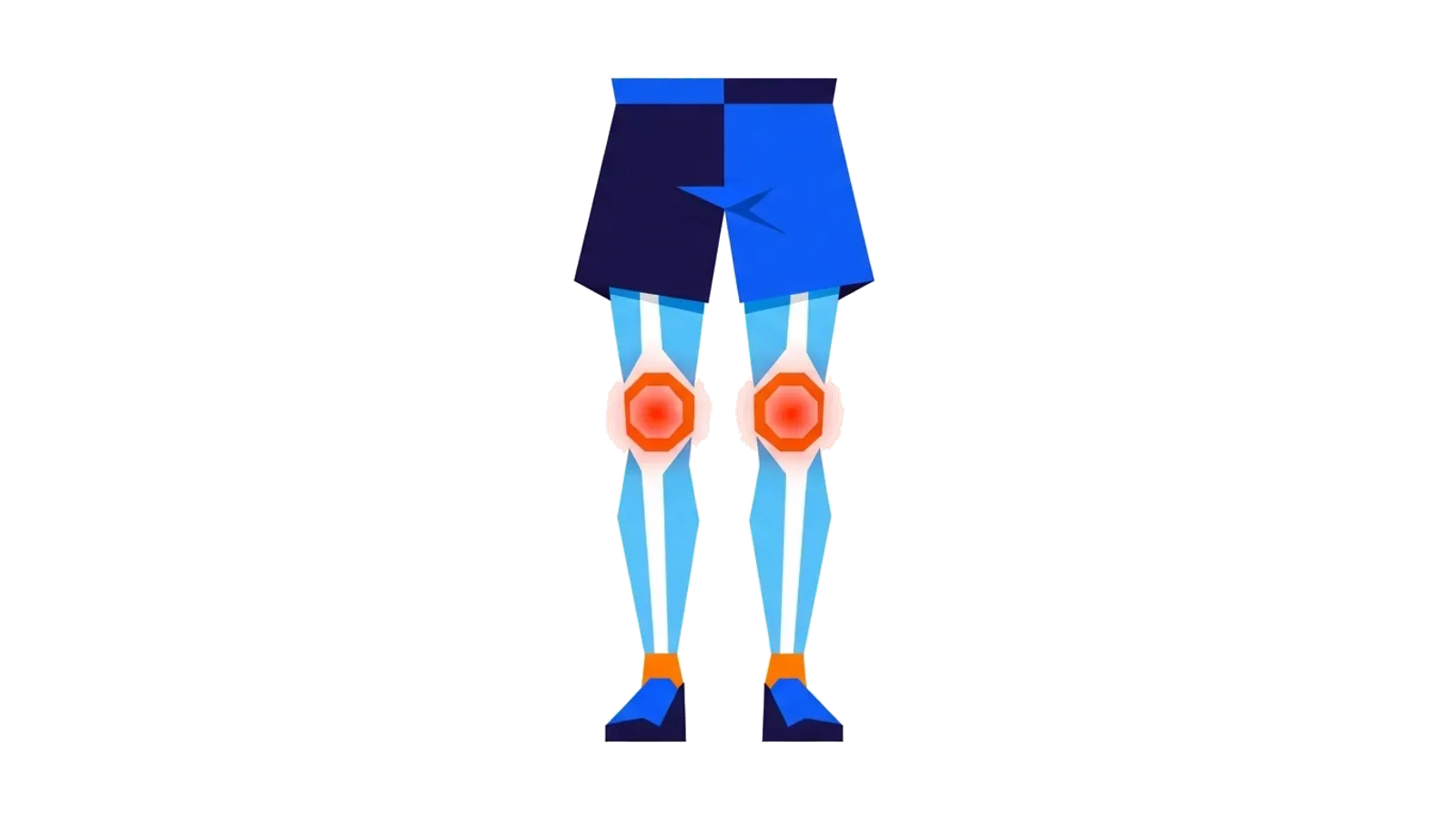
The day after (or two days after) your first run, your calves are hard as wood, your thighs pull on every stair, and you wonder: "Is this normal, or am I injured?" In the vast majority of cases, it is perfectly normal. But you need to recognize the rarer situations where it is not.
Muscle soreness: what exactly is it?
Muscle soreness (scientific term: DOMS, delayed onset muscle soreness) comes from micro-damage to muscle fibers and the inflammatory reaction that follows, caused by unaccustomed effort, especially eccentric contractions (the muscle contracts while lengthening, which happens massively at every running stride).
It does not appear right away: it arrives 12 to 24 hours after the effort, peaks between 24 and 72 hours, then fades over 5 to 7 days (Cheung et al., 2003, see sources).
Why does it hurt so much after the first run?
- Your muscles have never done this effort: novelty is what causes the most soreness
- Running's eccentric contractions are particularly hard on the calves and quads
- Unprepared tendons make the muscles compensate even more
- Beginners tend to run too fast, which amplifies the micro-damage
The good news: this soreness is the sign your body is adapting. It will fade for later sessions of the same kind. You will never again feel soreness as strong as after your very first run.
How long does it last?
| Time after the effort | Typical feeling |
|---|---|
| 0-12 h | Mild discomfort, general muscle fatigue |
| 12-24 h | Clear onset: stiffness, pain when moving |
| 24-48 h | Peak: stairs and long sitting are hard |
| 48-72 h | Gradual decrease, movement becomes smoother |
| 72-120 h | Slight leftover feeling, gradual return to normal |
| Beyond 7 days | Probably no longer soreness: see someone |
Relieving soreness: what works and what does not
The table below draws on the meta-analysis by Dupuy et al. (2018) on recovery techniques, the Cochrane review by Herbert et al. (2011) on stretching, and the work of Lilja et al. (2018) and Roberts et al. (2015) on anti-inflammatories and cold (see sources).
| Method | Effectiveness | Comment |
|---|---|---|
| Gentle walking (15-30 min) | ✅ Effective | Active recovery: reduces the feeling of soreness |
| Very easy cycling or swimming | ✅ Effective | Active recovery, no extra impact |
| Hot bath / long hot shower | ✅ Good | Relaxes, brings subjective relief |
| Self-massage by hand or with a roller | ✅ Good | Massage is the most effective technique on soreness in Dupuy et al.'s meta-analysis |
| Proper hydration | ✅ Good | Does not remove it, but helps recovery |
| Gentle stretching after exercise | ⚠️ Limited | Negligible effect on soreness (Cochrane review), but loosens up |
| Anti-inflammatories (ibuprofen) | ❌ Not advised | At high doses, limits muscle adaptations to training (Lilja et al.); only on medical advice |
| Ice bath | ⚠️ Debated | Reduces the feeling of soreness, but may blunt muscle adaptation (Roberts et al.) |
| Complete rest | ⚠️ Not ideal | Gentle movement beats staying still |
Training again while sore?
A common question: "Should I do my 2nd planned run 48 hours later when I am still sore?" Here is how to decide:
| Level of soreness | Decision |
|---|---|
| Mild, I walk normally | Do the planned session, start even more slowly |
| Moderate, stairs are awkward | Do 50% of the planned session, walk-run plus walking |
| Strong, I walk stiffly | Postpone by 1 day, replace with 30 min of easy walking |
| Very strong, pain at rest | Rest 2-3 days, very gradual return |
A light session with moderate soreness is even beneficial: active recovery is one of the techniques that reduce the feeling of soreness (see sources).
When to worry: 5 warning signs
Classic soreness is diffuse, symmetrical (both legs) and sits in the belly of the muscle. By contrast, these signs suggest something other than simple soreness:
| Signal | Possible cause | What to do |
|---|---|---|
| Pain very localized on one precise spot | Tendinopathy, shin splints, stress fracture | Rest + medical advice within 7 days |
| Pain on one side only | Asymmetric overload, imbalance | Rest 5 days, careful return |
| Pain getting worse instead of better after 72 h | A more serious injury | Prompt medical advice |
| Swelling, redness, warmth in the area | Acute inflammation | Rest + ice + medical advice |
| Bone pain when pressed (shin, foot bones) | Shin splints, stress fracture | Stop running + see a doctor |
Preventing soreness next time
You cannot remove early soreness completely, but you can greatly reduce it:
- Increase duration very slowly: no more than 10% longer each week
- Stay at a conversational pace: speed worsens the micro-damage
- Warm up properly: 5 min of walking + dynamic mobility
- Recover actively: 5 min of walking at the end of the session
- Drink well in the hours after the session
- Eat carbs + protein within 2 hours after exercise
After 4 to 6 weeks of regular running, soreness becomes almost unnoticeable, except after a major change in intensity or type of session.
Related tools
This information is educational and does not replace the advice of a sports doctor or a physical therapist. It was written by the Tempocito editors and has not been reviewed by a named health professional. The figures rely on the scientific and institutional sources listed at the end of the article.
If pain persists, gets worse, is intense or appears at rest, see a health professional.
Sources
- Cheung K, Hume PA, Maxwell L (2003). Delayed onset muscle soreness: treatment strategies and performance factors. Sports Med. 2003;33(2):145-164. Link
- Herbert RD, de Noronha M, Kamper SJ (2011). Stretching to prevent or reduce muscle soreness after exercise. Cochrane Database Syst Rev. 2011;(7):CD004577. Link
- Dupuy O, Douzi W, Theurot D, Bosquet L, Dugué B (2018). An evidence-based approach for choosing post-exercise recovery techniques to reduce markers of muscle damage, soreness, fatigue, and inflammation: a systematic review with meta-analysis. Front Physiol. 2018;9:403. Link
- Lilja M, Mandić M, Apró W, et al. (2018). High doses of anti-inflammatory drugs compromise muscle strength and hypertrophic adaptations to resistance training in young adults. Acta Physiol (Oxf). 2018;222(2):e12948. Link
- Roberts LA, Raastad T, Markworth JF, et al. (2015). Post-exercise cold water immersion attenuates acute anabolic signalling and long-term adaptations in muscle to strength training. J Physiol. 2015;593(18):4285-4301. Link